
What is Odoo? A Comprehensive Overview
Introduction
In today’s competitive and fast-evolving business landscape, organizations require efficient, scalable, and integrated systems to manage operations seamlessly. Managing multiple tools for different departments often leads to inefficiencies, data silos, and increased operational costs.
This is where Odoo ERP stands out — a powerful, all-in-one business management solution designed to streamline processes, improve productivity, and enable smarter decision-making.
What is Odoo?
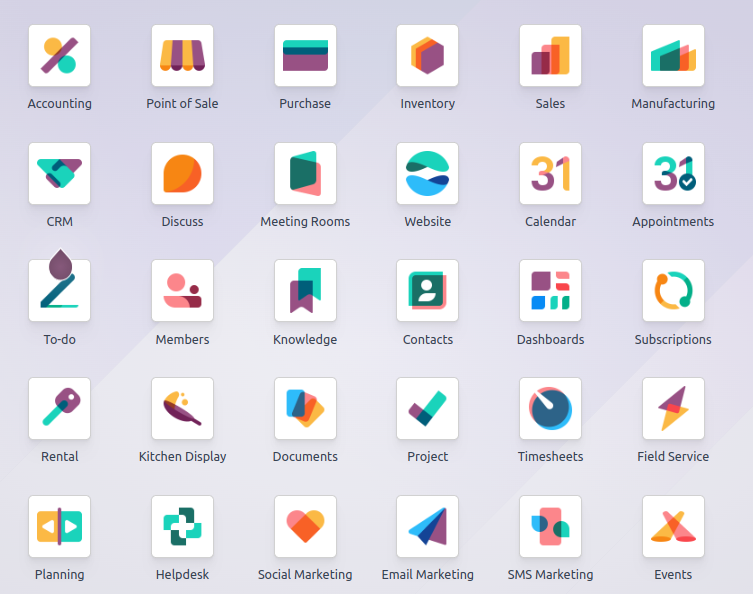
Odoo is a modern, open-source ERP (Enterprise Resource Planning) platform that offers a complete suite of business applications in a single system. It allows companies to manage and automate key operations such as:
- Accounting
- Sales & CRM
- Inventory & Supply Chain
- Human Resources
- Manufacturing
- E-commerce
With Odoo, businesses no longer need multiple disconnected systems — everything works together seamlessly.
Key Features of Odoo
1. All-in-One Business Suite
Odoo integrates all business functions into a single platform, eliminating the need for multiple software tools and ensuring data consistency across departments.
2. Modular & Scalable Architecture
Odoo follows a modular approach — businesses can start with basic modules and expand as they grow, making it highly scalable.
3. User-Friendly Interface
Its clean, intuitive interface ensures easy adoption by users, even with minimal technical knowledge.
4. High Customization Capability
Odoo is highly flexible and can be customized to match specific business workflows, industry needs, and operational processes.
5. Open Source Advantage
The Community version is free and supported by a global developer community, while the Enterprise version provides advanced features and official support.
Why Businesses Choose Odoo
Organizations across the globe prefer Odoo because:
- It is cost-effective compared to traditional ERP systems
- Offers end-to-end business management
- Provides real-time insights and reporting
- Supports easy integration with third-party tools
- Available in both cloud and on-premise deployment
Core Odoo Modules Explained
CRM (Customer Relationship Management)
Helps manage leads, track opportunities, and improve customer engagement.
Sales Management
Enables quotation creation, order tracking, and sales performance monitoring.
Inventory Management
Provides real-time stock visibility, warehouse control, and automation.
Accounting
Handles invoicing, tax calculations, financial reporting, and compliance.
Human Resources (HR)
Manages employee data, payroll, attendance, and recruitment.
Who Should Use Odoo?
Odoo is ideal for:
- Startups looking for affordable ERP solutions
- Small & Medium Businesses aiming to scale
- Large Enterprises needing integrated systems
- Manufacturing and trading companies
- Service-based organizations
How Odoo Drives Business Growth
Odoo empowers businesses by:
- Automating repetitive processes
- Providing real-time data for better decision-making
- Enhancing collaboration across departments
- Improving customer satisfaction and service delivery
Conclusion
Odoo is not just an ERP system — it is a complete business management ecosystem. Its flexibility, scalability, and cost-effectiveness make it one of the most preferred ERP solutions globally.
Whether you are starting your business journey or scaling operations, Odoo provides the tools needed to achieve efficiency and growth.
About ERP Harbor Consulting Services
ERP Harbor Consulting Services brings 14+ years of expertise in Odoo implementation, customization, and support. We help businesses streamline operations, improve efficiency, and achieve digital transformation through tailored Odoo solutions.
e...